Quick answer
What does a law enforcement consultant do?
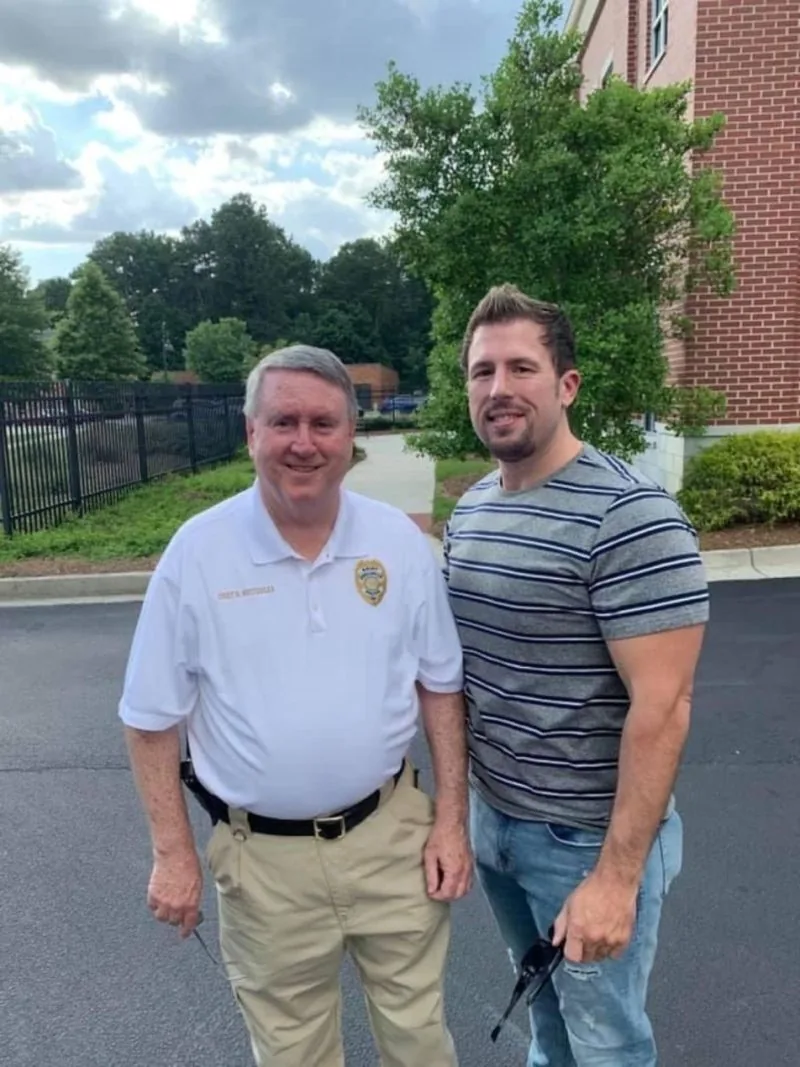
A law enforcement consultant looks at your agency from the outside, says plainly what works and what does not, and leaves you with priorities you can take to the people who hold the budget. This is police department consulting, sheriff's office consulting and local government work, for municipal and county agencies. Two people do it. Chief Roy Whitehead leads the public sector law enforcement side. He has run agencies from 16 to 142 sworn, and he has also sat on the city manager side of the budget. I lead the private sector physical security side.
Funding when the general fund will not cover it
Most of what an agency needs is not in the budget your city council or county commission approved. That makes it a funding question. As Snellville's chief, Chief Whitehead found grant opportunities through his professional contacts and research, organized the people who prepared the applications and oversaw the submissions. Under his leadership the department won a federal grant to hire two officers and state highway safety grants, including the 2020 grant that stood up its traffic enforcement unit.
When a grant does not fit the problem, he looks at what the community has: a citizens police academy alumni association, a police foundation, and training other agencies already run in the region. Fill those seats, and have everyone who goes teach the rest of the department what they learned. In 2011 he partnered on a sexual assault exam center at Eastside Medical Center, now Piedmont Eastside, where a $5,000 Walton EMC Operation Round Up grant paid for evidence equipment.
We help your agency do the same: find the routes that fit, and organize the work. Every route is an option to pursue, not funding we promise.
The state tax credit he describes is Georgia's Qualified Law Enforcement Donation Credit, created by the LESS Crime Act in 2022. It applies to Georgia taxpayers giving to a foundation the state has certified, within the state's limits. Other states differ, so we check what applies where you are.
Read the transcript
Many police agencies these days are looking for nontraditional funding sources. One mechanism that can be put into place is a 501(c)(3). Many agencies have things like a Citizens Police Academy Alumni Association. This group is allowed to receive tax-deductible donations, as well as to do fundraising for the department, to provide the resources necessary to buy certain equipment. A second opportunity is a police foundation. That is an opportunity for a civilian board to set up and receive donations for use by the police department in all aspects of the department. It's funded by donors being able to provide the money: instead of paying state income tax, they can pay that directly to the foundation. Therefore, they're able to keep money within their local jurisdiction, but it really doesn't cost them anything more than what they would be paying in the normal course of business. It's a 501(c)(3) and can also accept tax-deductible donations. Both of these groups are a tremendous advantage for the departments to be able to receive additional funding that ordinarily they wouldn't get in the normal course of budgeting.
How an engagement starts
One point of contact from the first call to the last. You review everything before you commit to anything.
Questions
Law enforcement consulting FAQs
What does law enforcement consulting cost?
It is priced to the size of the agency and what you need done, so a ten officer agency is not scoped like a large city department. You get the scope and the cost in writing before anything starts.
Do you work with small police departments?
Yes. Small municipal departments and county agencies are often where an outside view helps most, because the chief is usually doing three jobs.
Do you work with sheriffs and county government?
Yes. Municipal police departments, sheriffs' offices, county agencies, and the city or county managers who hold the budget.
What does a police department assessment produce?
A written report for your agency that names the issues and recommends practical corrective actions. The scope and what you receive are agreed in writing before work starts.
Can you provide an interim police chief?
Yes. Chief Whitehead takes interim chief assignments. An interim chief who is not applying for the permanent job can settle what has been deferred, so the next chief starts from a better place.
Where do you work?
Anywhere in the United States. Funding options and rules differ by state, so we check what yours allows before we recommend anything.
Where do we start?
Book the 30-minute Strategy Call and tell us what the agency is up against. You get a straight answer on whether we can help and what the next step is.